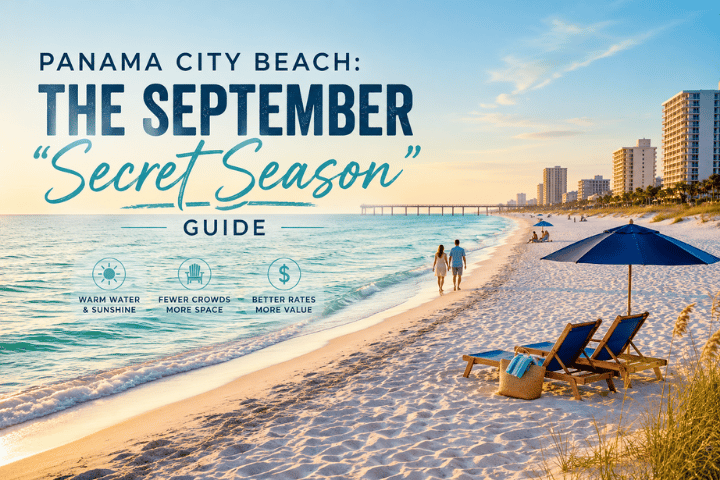
September is widely considered by locals to be the best time of year to visit Panama City Beach. The peak summer crowds have dissipated, rates become much more competitive, and the Gulf of Mexico is still incredibly warm.
Posts
Posted on 6/29/2026
Panama City (the Mainland): A Different Market on the Same Bay
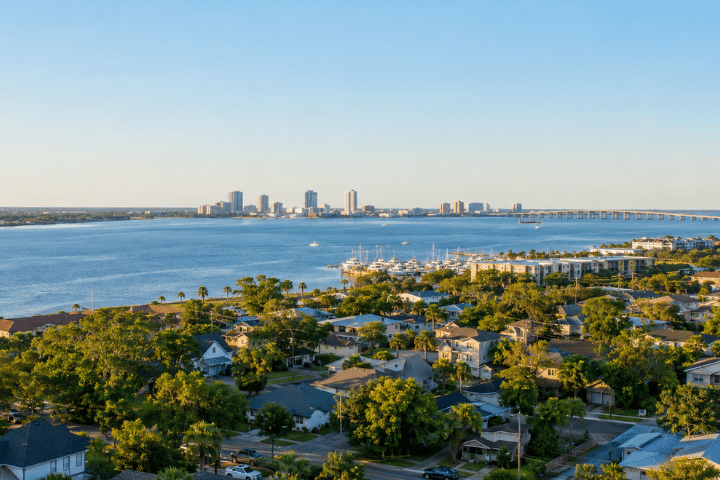
It's an easy mistake to treat "Panama City" and "Panama City Beach" as the same place. They're separate incorporated cities with separate governments, separate rules, and — importantly for an investor — separate demand profiles.
Posted on 6/27/2026
Unincorporated Bay County: The County's Vacation Rental Certificate Program
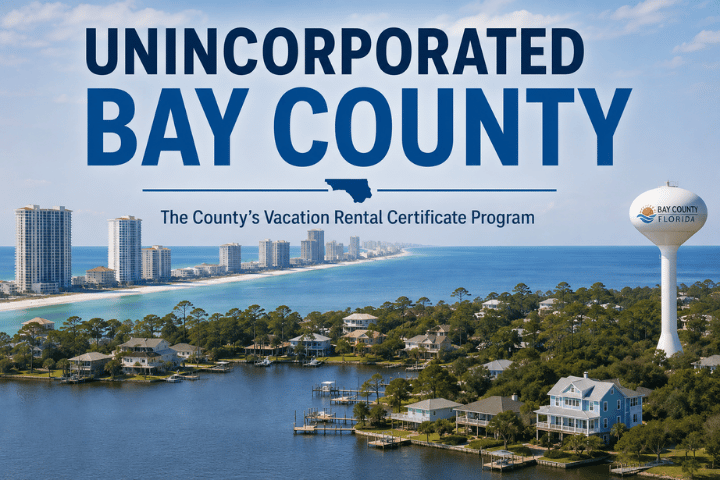
Plenty of properties that market themselves as "Panama City Beach" rentals sit outside the city limits, in **unincorporated Bay County**. If yours is one of them, the City's Ordinance 1632 does not apply to you — the county runs its own program, with its own portal, its own inspection rules, and a couple of requirements the city doesn't have. This post is the county counterpart to the city anchor guide.
Posted on 6/26/2026
Mexico Beach: Short-Term Rental Rules and the Post-Michael Rebuild
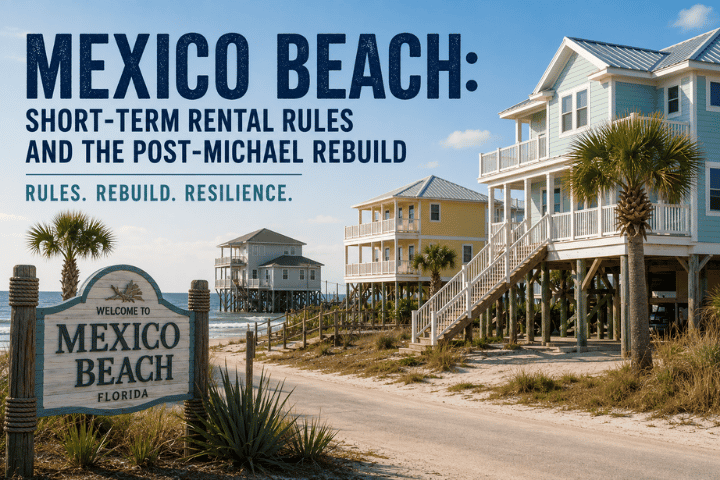
Mexico Beach is the quiet end of Bay County's coast — a small, low-rise, family-and-fishing town that deliberately never became Panama City Beach. It's also where Hurricane Michael came ashore in 2018, which makes it one of the most interesting STR markets on the Gulf: a community rebuilt, in large part, to modern standards, with a regulatory and demand profile distinct from the high-rise market 30 miles west.
Posted on 6/24/2026
Florida's Short-Term Rental Preemption Law, Explained in Plain Language
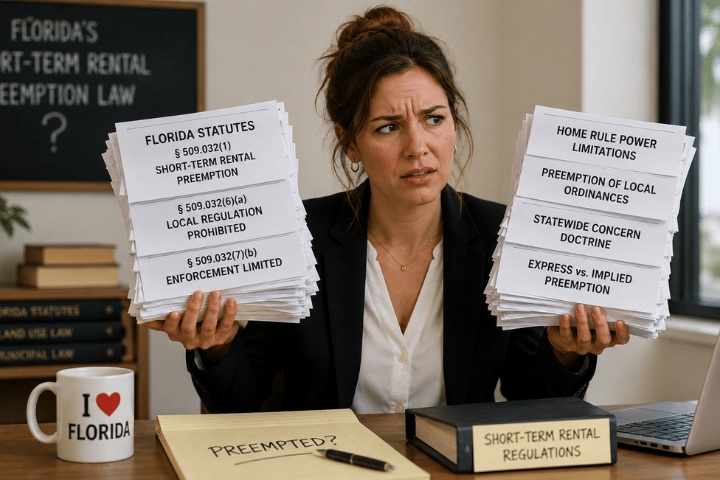
Before you read a single local ordinance, you need to understand the rule that sits above all of them: Florida's short-term rental **preemption**. It's the reason a city like Panama City Beach can require certificates, inspections, and signage but *cannot* simply ban vacation rentals — and it's the reason the rules differ so sharply from one Florida town to the next.
Posted on 6/23/2026
SB 280, the Veto, and What's Next for Florida STR Law
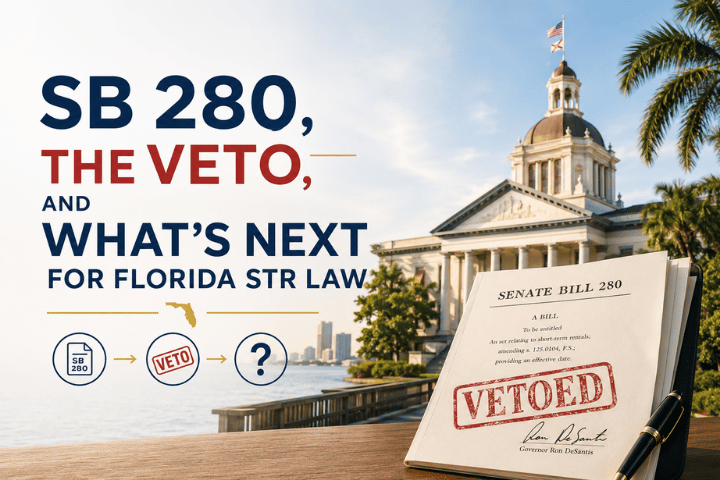
If you've researched Florida short-term rental law in the last couple of years, you've run into **Senate Bill 280** — the most significant attempt yet to rewrite the rules statewide. It would have changed how rentals are registered, taxed, and policed. It was vetoed. But that's not the end of the story.
Posted on 6/20/2026
The Florida DBPR Vacation Rental License: Single, Group, and Collective Explained
Every legal short-term rental in Florida starts with one thing: a state license from the Department of Business and Professional Regulation (DBPR), issued through its Division of Hotels and Restaurants. Local certificates, tourist-tax registrations, and inspections all sit on top of it — but without the DBPR license, you're not operating legally anywhere in the state.
Posted on 6/19/2026
Condo and HOA Rules: The Layer of STR Law Above City Hall
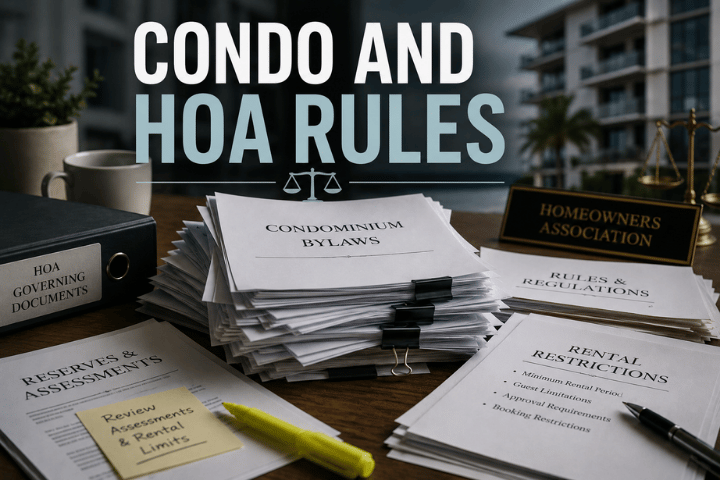
You can do everything right at the state, county, and city level — DBPR license, Vacation Rental Certificate, tourist-tax registration, passed inspection — and still be unable to legally rent your property short-term.
Posted on 6/18/2026
The Full Panama City Beach Tax Stack: What You Collect, Remit, and to Whom
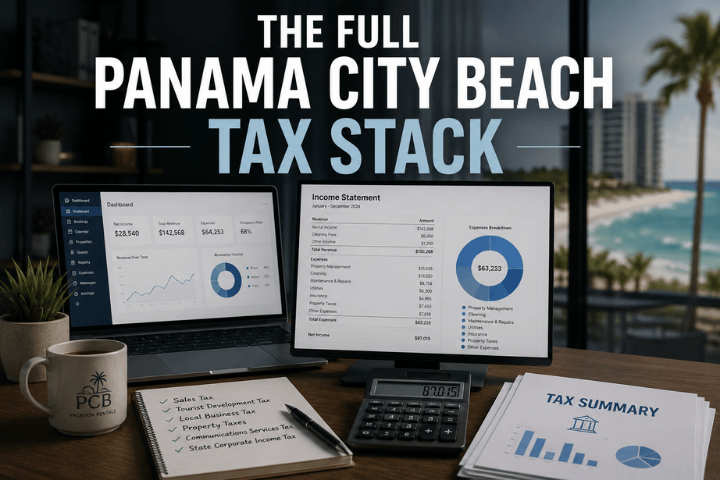
Taxes on a Panama City Beach rental aren't one line — they're a stack, paid to different agencies on different schedules, and partly automated by the booking platforms and partly not.
Posted on 6/17/2026
Coastal Maintenance and Hurricane-Hardening: The Real Cost Model for a Gulf Rental
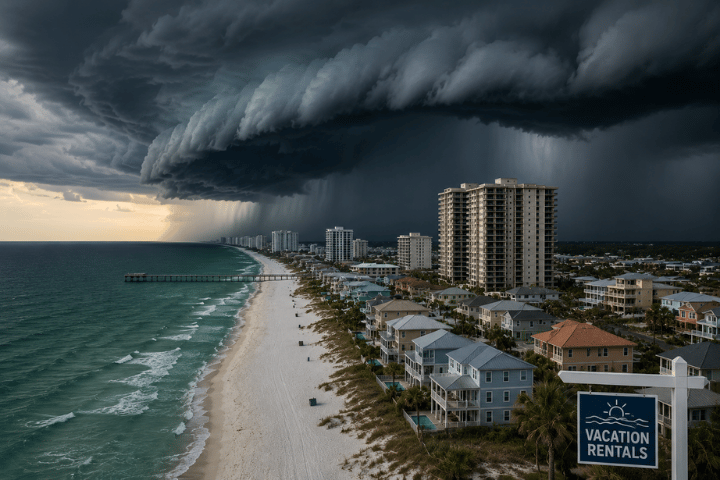
A beachfront rental's pro forma usually celebrates the revenue and underweights the coast's running cost. Salt, humidity, wind, and storm risk make a Gulf-front property meaningfully more expensive to own and operate than an inland one — and Hurricane Michael made the resilience side of that equation impossible to ignore in Bay County.