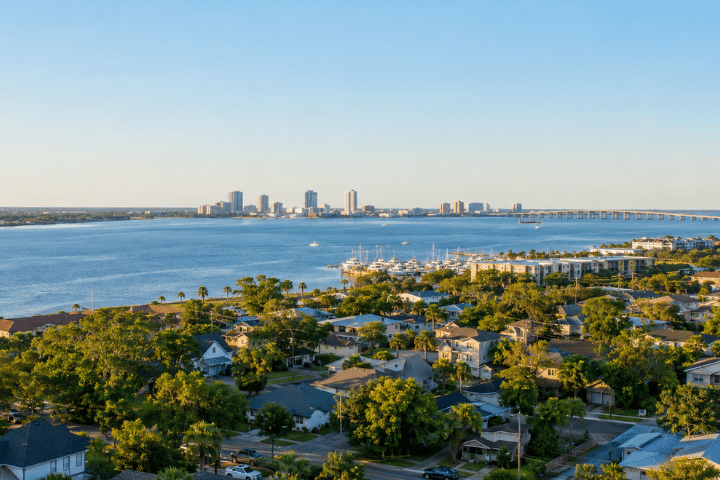
It's an easy mistake to treat "Panama City" and "Panama City Beach" as the same place. They're separate incorporated cities with separate governments, separate rules, and — importantly for an investor — separate demand profiles. Panama City is the mainland seat of Bay County: downtown, the historic St. Andrews waterfront, the marina district, and the workforce, medical, and military economy that surrounds them. It is not primarily a beach-vacation market, and that changes the STR thesis.
Separate City, Separate Rules
Panama City is its own municipality. The City of Panama City Beach's Ordinance 1632 does not govern mainland properties. A mainland short-term rental answers to the City of Panama City's own zoning and any registration requirements the city maintains, plus the state baseline and Bay County tourist tax. Because city programs differ and evolve, confirm the City of Panama City's current short-term rental and zoning requirements directly with the city before you operate — don't port the Beach's checklist across the bay.
What is consistent: properties within the city limits of Panama City are part of Bay County's tourist-tax special district, so the 5% Bay County TDT applies (and, as everywhere in Bay County, the booking platforms won't remit it for you), on top of the 6% state sales tax. A DBPR vacation rental license is required just as it is everywhere in Florida.
A "Blended-Demand" Market - Not A Beach Market
The mainland's renter mix is fundamentally different from the Beach's family-vacation crowd:
- Workforce and relocation stays. Panama City anchors the region's jobs, hospitals, and services. That supports mid-length and extended stays from traveling professionals, contractors, and relocating families — demand that's steadier and less weather-dependent than beach tourism.
- Medical and military adjacency. Major area hospitals and the region's military presence (including the rebuild of nearby Tyndall Air Force Base and the Navy's presence in the area) generate temporary-housing demand that beach rentals don't see. This favors comfortable, practical, well-located units over beachfront amenity stacks.
- Insurance and displacement demand. In the wake of major storms, mainland rentals absorb displaced residents and the contractors who rebuild — a demand source that's real but episodic, and one to treat as upside rather than baseline.
- Downtown and St. Andrews character. The walkable historic districts and waterfront attract a leisure traveler too, just a different one — drawn by dining, the marina, and local character rather than the sugar-sand strip.
What This Means For Strategy
- Underwrite to longer average stays and steadier occupancy, not peak beach ADRs. The mainland trades summer spikes for year-round consistency.
- Mind monthly thresholds. Extended stays can cross the 30-day and six-month lines that change tax treatment and landlord-tenant exposure; structure leases deliberately.
- Entry pricing is generally lower than beachfront, which can support healthier cash-on-cash returns even without headline nightly rates — a point we develop in the PCB Market Scorecard.
- Storm resilience still matters. The mainland was hit hard by Hurricane Michael; the same code-built-vs-older-stock distinction that defines the coast applies here too.
What It Really Means
Panama City is a separate city with its own rules and a blended, year-round demand base built on jobs, healthcare, the military, and downtown character — not on beach tourism. Verify the city's specific STR and zoning rules, satisfy the state license and Bay County tourist-tax obligations, and underwrite it as the steadier, lower-entry, longer-stay market it actually is.
This article is general educational information, not legal or tax advice. The City of Panama City maintains its own rules, which change. Confirm current zoning and registration requirements with the City of Panama City and verify your parcel's jurisdiction.