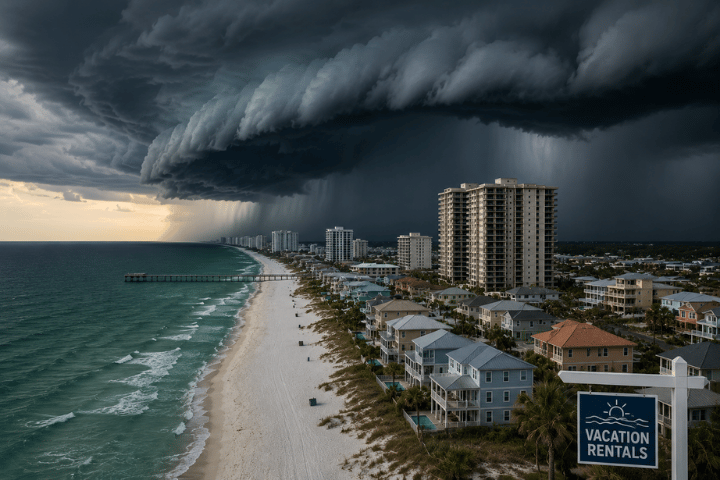
A beachfront rental's pro forma usually celebrates the revenue and underweights the coast's running cost. Salt, humidity, wind, and storm risk make a Gulf-front property meaningfully more expensive to own and operate than an inland one — and Hurricane Michael made the resilience side of that equation impossible to ignore in Bay County. This post builds a realistic picture of those costs so you can underwrite with eyes open.
This is general education, not investment or insurance advice. Treat all figures as illustrative ranges; your numbers depend on the specific property.
The Coastal Maintenance Premium
Salt air and humidity attack a building continuously. Compared with an inland rental, plan for:
- Faster HVAC Wear and Corrosion. Coastal HVAC systems and condenser coils corrode faster; expect shorter service life and more frequent maintenance, plus protective coatings and rinsing.
- Corroding Fixtures and Hardware. Hinges, fasteners, railings, locks, light fixtures, and outdoor furniture degrade quickly without marine-grade materials and regular upkeep.
- Exterior Finishes and Sealants. Paint, caulk, and waterproofing fail sooner; exterior wood and decking need more frequent attention. Moisture and mold management. High humidity plus heavy guest turnover means dehumidification, ventilation, and vigilance to prevent mold issues between stays.
- Sand and High-Traffic Wear. Beach rentals see intense seasonal use; furnishings, flooring, and linens turn over faster than in a typical rental.
These aren't catastrophes — they're a steady premium on routine maintenance, replacement reserves, and turnover budgets. Underwrite a higher annual maintenance/reserve line than you would inland.
The Insurance Reality
Coastal insurance is frequently the single largest non-mortgage carrying cost, and it has three components to understand:
- Windstorm Coverage, which along the coast is often expensive and sometimes carried through Florida's insurer of last resort when private carriers decline.
- Flood Insurance, typically separate (often via the National Flood Insurance Program), driven by your flood zone and elevation. An elevation certificate can materially affect the premium.
- Standard Property/Liability coverage appropriate to a commercial short-term-rental use, which differs from a standard homeowner's policy.
Premiums vary enormously by elevation, construction, and proximity to the water. Get real quotes for the specific parcel before you close — coastal insurance can turn a promising pro forma negative on its own.
The Hurricane Michael lesson: Resilience is now a Financial Variable
When Hurricane Michael struck Bay County in October 2018 as a Category 5, the damage map drew a sharp line between older construction and homes built to (or above) modern code. The Panhandle had historically been allowed lower design wind standards than South Florida — in some areas as low as 120–130 mph, well under Michael's winds — and much of the pre-2002-code housing stock was destroyed, while newer, code-compliant homes performed far better. The widely reported "Sand Palace" survived precisely because it was built above code, with deep pilings, reinforced construction, and a wind-smart roof.
Subsequent editions of the Florida Building Code incorporated lessons from Michael, including updated wind maps and stronger provisions for northern Florida. For you, this translates into a concrete underwriting principle: a newer, properly hardened property carries lower storm risk, often better insurability, and a real marketing advantage with safety-conscious families.
Hardening Features That Pay Off
If you're buying or upgrading, these are the features that matter most on this coast:
- Impact-rated windows and doors (or rated shutters) to protect the building envelope
- Strong roof-to-wall connections (straps/clips) and hip roofs, which shed wind better than gable ends
- Elevated construction on adequate pilings in flood-prone areas, with attention to the elevation certificate
- Corrosion-resistant, marine-grade exterior materials and quality sealing
- Reinforced garage doors and secured roof coverings
Each reduces both physical risk and, frequently, insurance friction — and several are exactly what distinguishes the post-2018 rebuild stock in places like Mexico Beach.
Keys To Know
The coast charges rent in maintenance, insurance, and storm risk. Underwrite a higher reserve and insurance line than an inland comp, get real elevation-specific insurance quotes before closing, and treat resilience as a financial asset: in post-Michael Bay County, a hardened, code-built property is cheaper to insure, safer to own, and easier to market.